CORUNDUM
Corundum: Properties, Formation, Ruby, Sapphire & Uses
It is crystalline aluminum oxide and one of the hardest naturally occurring minerals. It is the mineral species behind ruby and sapphire: red corundum is ruby, while other gem colors are classified as sapphire. Trace elements create much of its color variety.
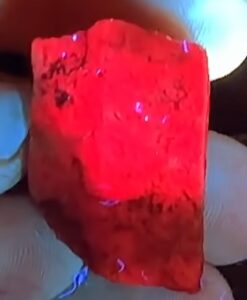
Corundum Video: Ruby Crystal Specimen
Quick Facts
- Formula: Al₂O₃ (aluminum oxide).
- Mineral class: oxide; crystal system: trigonal.
- Mohs hardness: 9.
- Red gem corundum is ruby; other gem colors are sapphire.
- Chromium produces ruby’s red color.
- Uses include jewelry, abrasives, and industrial components.
How Corundum Forms
It forms where aluminum is abundant and available silica is relatively low. It occurs in metamorphic rocks such as marble, gneiss, and schist, as well as some igneous settings. Weathering can transport durable crystals into river and stream sediments, where secondary deposits may accumulate gem material.
Color and Chemistry
Pure corundum is colorless. Trace chromium produces ruby’s red, while iron and titanium commonly contribute to blue sapphire. Other trace elements and structural features can produce yellow, pink, purple, green, and colorless sapphire. Color alone cannot reliably establish geographic origin or treatment.
Physical Properties
It has a trigonal crystal structure and Mohs hardness 9. It resists scratching but can still chip or fracture under strong impact. Crystals may form barrel-shaped or six-sided prismatic habits, and rough specimens can show growth features, color zoning, or inclusions.
Ruby and Sapphire
Ruby and sapphire are gem varieties of the same mineral species. Red corundum is ruby; other gem colors are sapphire. Boundary terms around pink and red can vary by grading convention. Some stones are heat-treated, fracture-filled, diffused, or otherwise enhanced, so treatment disclosure is important.
Corundum Uses and Identification
Ruby and sapphire are prized gemstones. it is also used as an abrasive because it can grind and polish softer materials. Synthetic specimens have the same essential composition and crystal structure as natural specimens and is used in jewelry and specialized components. A qualified gem laboratory can assess natural or synthetic origin and treatments; a scratch test is not appropriate for finished gems.
Corundum Care
Clean suitable ruby and sapphire jewelry with lukewarm water, mild soap, and a soft brush. Avoid aggressive cleaning when fractures, fillings, coatings, or unknown treatments are present. Store gems separately and protect them from sharp impacts; hardness does not make a stone indestructible.
Frequently Asked Questions
Are ruby and sapphire the same mineral?
Yes. Both are gem varieties.
How hard is corundum?
It has Mohs hardness 9, below diamond on the traditional Mohs scale.
What makes ruby red?
Trace chromium produces ruby’s red color.
Further Reading & Sources
- University of Waterloo Earth Sciences Museum: Corundum
- Australian Museum: Sapphire and Ruby
- Geology.com: Corundum
- Wikipedia: Corundum — general background and references.
Explore More Gems and Minerals
Explore The Crystal Collector® guides to beryl, opal, and quartz.