MALACHITE
Malachite Crystal: Nature’s Green Masterpiece
Few minerals capture the imagination quite like malachite. With its rich emerald hues, swirling bands, and fascinating history, malachite has been treasured for thousands of years by royalty, artists, miners, and crystal collectors alike. Whether you’re drawn to its striking appearance, its connection to copper, or its reputation as a powerful transformation stone, malachite is one of the most recognizable and collectible minerals in the world.
Let’s explore how this remarkable crystal forms, where it can be found, its incredible history, and why it remains a favorite among collectors today.
How Does Malachite Form?
Malachite is a secondary copper carbonate hydroxide mineral that forms when copper-rich deposits are exposed to oxygen, carbon dioxide, and groundwater. Over time, these elements react with the copper, creating the brilliant green mineral we know as malachite.
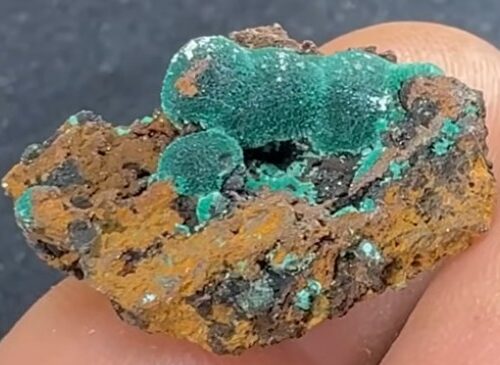
This natural process takes place near the Earth’s surface in what geologists call the oxidation zone of copper deposits. As mineral-rich water slowly moves through fractures in the rock, layers of malachite begin to develop. Depending on the conditions, it may grow as silky fibers, rounded botryoidal formations, stalactites, or dense masses with beautiful concentric bands.
The striking light and dark green rings seen in polished malachite are the result of changing mineral concentrations during its growth. No two pieces are exactly alike, making every specimen a unique work of nature.
How Old Is Malachite?
Malachite itself is still forming today wherever copper deposits are exposed to the right environmental conditions. However, many of the deposits that produce today’s specimens began forming millions of years ago.
Some of the copper ore bodies that contain malachite originated hundreds of millions—even billions—of years ago. The mineral collectors admire today is often the product of geological processes that have been unfolding for an incredibly long time.
Holding a polished piece of malachite is like holding a small chapter of Earth’s ancient history.
Where Is Malachite Found?
Malachite occurs anywhere significant copper deposits exist, but some locations have become world-famous for producing exceptional specimens.
The Democratic Republic of the Congo is considered one of the finest sources of collector-quality malachite. The region produces vibrant green crystals, large botryoidal specimens, and beautifully banded material prized by collectors around the globe.
Other notable sources include:
Arizona, USA – Famous for spectacular copper mines and high-quality malachite specimens.
New Mexico, USA – Produces attractive collector pieces from historic mining districts. Directions to the Graphic Mine HERE
Namibia – Known for outstanding crystal formations.
Zambia – Rich copper deposits often yield beautiful malachite.
Australia – Several mining regions produce collectible specimens.
Russia – The Ural Mountains supplied magnificent malachite that decorated palaces, churches, and museums during the 18th and 19th centuries.
Mexico – Home to numerous copper mines that also produce attractive malachite.
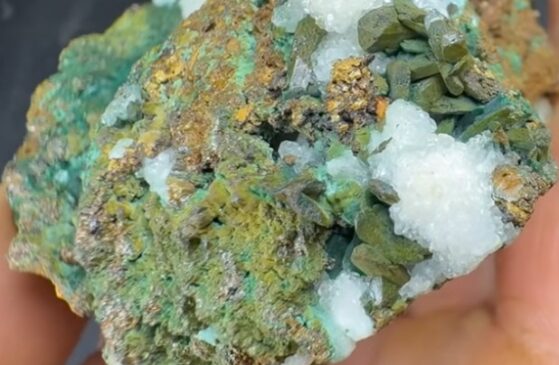
Each locality produces material with slightly different colors, patterns, and crystal habits, making origin an interesting part of collecting.
A Stone Steeped in History
Malachite has captivated civilizations for over 6,000 years.
Ancient Egyptians mined malachite as early as 4000 BC. They carved it into jewelry, amulets, decorative objects, and cosmetics. Ground malachite powder was even used as green eye makeup, believed to provide both beauty and protection.

The Greeks and Romans admired malachite for ornamental carvings and protective talismans. During the Middle Ages, many believed the stone could ward off evil spirits and protect travelers.
Perhaps the most spectacular use of malachite came from Imperial Russia. Massive deposits discovered in the Ural Mountains allowed artisans to create breathtaking columns, fireplaces, tabletops, and decorative panels. The famous Malachite Room in the Winter Palace remains one of the finest examples of this craftsmanship.
Throughout history, malachite has symbolized wealth, protection, and transformation.
Metaphysical Properties of Malachite
Among crystal enthusiasts, malachite is often called the “Stone of Transformation.”
Many believe it helps:
Encourage personal growth and positive change
Absorb negative energy
Promote emotional healing
Increase confidence
Inspire courage during life’s transitions
Open and balance the heart chakra
Some practitioners also believe malachite amplifies energy, making it a popular meditation companion.
While these metaphysical properties are based on spiritual beliefs rather than scientific evidence, they continue to make malachite one of the most sought-after crystals among collectors and energy workers alike.
Caring for Your Malachite
Although malachite has a hardness of approximately 3.5–4 on the Mohs scale, it is relatively soft compared to many gemstones.
To preserve its beauty:
Avoid harsh chemicals and acidic cleaners.
Keep it away from prolonged exposure to water.
Store it separately from harder minerals that could scratch its surface.
Clean gently with a soft, dry cloth.
Because raw malachite contains copper, avoid inhaling dust created by cutting or polishing, and always wash your hands after handling rough specimens.
Why Collectors Love Malachite:
Few minerals combine beauty, history, and geology as perfectly as malachite. Every specimen tells a story—from the slow movement of mineral-rich groundwater beneath Earth’s surface to the ancient civilizations that treasured its vivid green color.
Whether you’re displaying a polished freeform, a raw botryoidal cluster, or an intricate carved sculpture, malachite is a centerpiece in any collection. Its dramatic patterns ensure that no two pieces are ever identical, making each one a truly one-of-a-kind treasure.
For collectors, malachite represents more than just another mineral. It is a connection to Earth’s geological past, human history, and the timeless fascination with nature’s artistry.
Whether you’re just beginning your crystal journey or adding another exceptional specimen to your display, malachite remains one of the most captivating minerals you’ll ever own.
MOHS HARDNESS
3.5 – 4
LUSTER
Varies widely based on its crystal structure and form. Fibrous or radiating specimens display a silky luster, polished massive forms have a vitreous (glassy) to sometimes adamantine shine, and rough, opaque, or weathered pieces usually appear dull or earthy.
MALACHITE CRYSTAL CHEMICAL COMPOUND
Formula: \(Cu_{2}(CO_{3})(OH)_{2}\)
Composition by Weight: Copper (\(57.48\%\)), Oxygen (\(36.19\%\)), Carbon (\(5.43\%\)), and Hydrogen (\(0.90\%\))
Solubility: Like all carbonates, it dissolves in dilute acids, producing a bright green liquid and releasing carbon dioxide.
Thermal Behavior: It is not stable at high temperatures; chemical decomposition and the release of water and carbon dioxide begin at about \(200^{\circ }\text{C}\).
DIAGNOSTIC PROPERTIES
Color: Light to dark green. It often displays dark green and light green bands like a tree ring.
Streak: Pale green. If you scrape it on a ceramic tile, it leaves a light green mark.
Acid Reaction: It fizzes when you drop dilute hydrochloric acid (HCl) on it. This releases carbon dioxide gas and turns the acid a green color.
Hardness: 3.5 to 4 on the Mohs Hardness Scale. This means it is easily scratched by a copper penny or a steel knife.
Habit (Shape): It rarely forms clear crystals. Instead, it forms bumpy, bubbly masses (called botryoidal) or fuzzy, needle-like fibers.